

There is something slightly strange about New Year’s Day when you really think about it. At 11:59 p.m., we are living one ordinary minute of our lives. Sixty seconds later, people are cheering, hugging strangers, opening bottles of Champagne, watching fireworks and promising themselves they will finally exercise more, spend less or become the person they have been meaning to become for years.
Nothing in the physical world changes at midnight. The house is the same, our problems have not disappeared, and whatever we left unfinished on December 31 will probably still be waiting for us on January 1. Yet somehow, the date feels different.
That may be the most interesting thing about New Year’s Day. Across cultures and continents, people have created rituals to mark the moment when one period of time ends and another begins. Some count down beneath skyscrapers, some eat twelve grapes before the clock stops chiming, some ring temple bells, some wear white and walk toward the sea, while others simply sit at home with the people they love.
The traditions look different, but the hope behind them is surprisingly similar. We want to leave something behind, carry something forward and believe that, perhaps this time, things can be different.
What is New Year’s Day and when is it celebrated?
Quick answer: New Year’s Day is celebrated on January 1 in countries that use the Gregorian calendar for civil purposes. It marks the beginning of a new calendar year and is commonly associated with fresh starts, good luck, family gatherings, resolutions and hopes for the year ahead.
When is New Year’s Day?
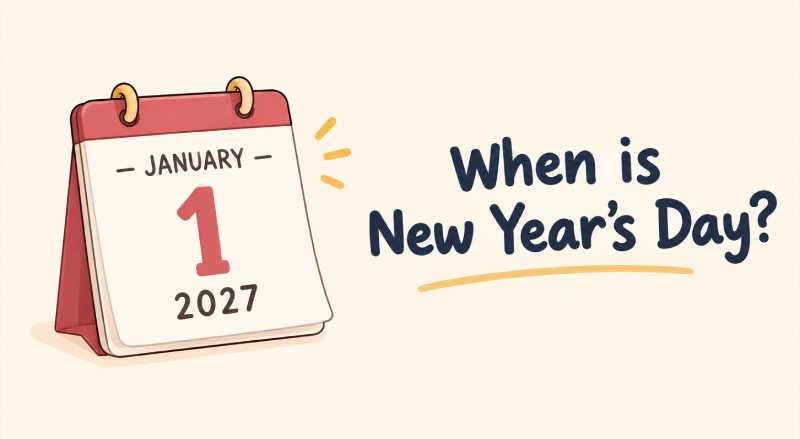
New Year’s Day falls on January 1 every year, immediately following New Year’s Eve on December 31. The moment between the two is marked by the familiar midnight countdown, when people count the final seconds of the old year before welcoming the new one.
The next New Year’s Day falls on Friday, January 1, 2027. January 1 is a public holiday in many countries, although the way people spend it differs considerably. Some continue celebrating well into the morning, some visit relatives or religious sites, and others spend the first day of the year doing very little at all, which after the previous night may be the most sensible tradition of the bunch.
Although January 1 has become the dominant civil New Year across much of the world, it is important to distinguish a shared international calendar from cultural uniformity. Many societies maintain additional religious, agricultural or traditional New Year observances according to their own calendars. January 1 may therefore be the official beginning of the civil year without being the only meaningful “new year” people celebrate.
Why does the year begin on January 1?
The answer takes us back to ancient Rome.
January takes its name from Janus, the Roman god associated with beginnings, doorways and transitions. He was traditionally represented with two faces, one looking backward and the other forward. It is difficult to imagine a better symbolic figure for the beginning of a new year.
Roman calendar practices changed over time, but January 1 became increasingly important as the beginning of the civic year. Julius Caesar’s calendar reform, which introduced the Julian calendar, reinforced January 1 as the start of the year. The later Gregorian calendar retained January 1, and its gradual international adoption helped turn the date into the civil New Year familiar today.
The symbolism seems almost too perfect. We enter January looking in both directions, remembering what happened while wondering what comes next. Perhaps the Romans understood New Year better than they realized.
The history of New Year’s Day
Quick answer: New Year celebrations are thousands of years old, but January 1 became the dominant beginning of the civil year through Roman calendar reforms and the later spread of the Gregorian calendar. The desire to mark a new cycle, however, existed long before modern calendars.
The earliest New Year celebrations
Humans were celebrating new cycles long before anyone stood in Times Square waiting for a glowing ball to drop.
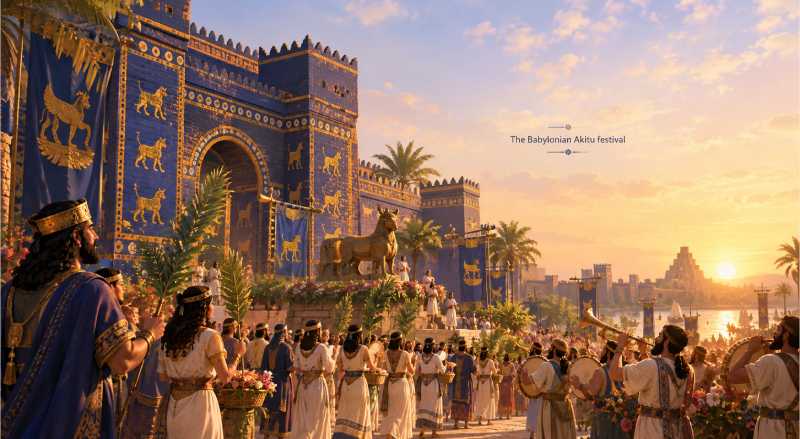
In ancient Mesopotamia, seasonal festivals marked renewal and the agricultural cycle. The Babylonian Akitu festival, for example, was associated with the New Year and took place around the spring season rather than January.
This makes sense when we consider how early societies experienced time. Before office calendars and digital reminders, the rhythm of the year was closely tied to planting, harvest, rainfall, daylight and seasonal change. A new year was not simply a number changing. It represented the beginning of another cycle of survival.
How ancient Rome shaped January 1
Ancient Rome changed the way much of the later Western world organized time. January became associated with Janus and with the idea of crossing from one period into another. Roman New Year customs also included visits, good wishes and gifts.
The month itself therefore carried a built in metaphor. Janus looked toward the past and the future, while January became the doorway between them. Even today, that is essentially what people do on New Year’s Eve. We look back at the year we have lived and almost immediately start talking about the one we have not lived yet.
From the Julian calendar to the Gregorian calendar
Julius Caesar’s calendar reform helped formalize January 1 as the beginning of the year in the Roman system. The Julian calendar lasted for centuries but accumulated small astronomical inaccuracies over time.
The Gregorian calendar, introduced under Pope Gregory XIII in 1582, corrected part of that drift. Its adoption was gradual rather than immediate, but over the centuries it became the dominant civil calendar used internationally.
That is how January 1 eventually became recognizable across much of the modern world as New Year’s Day. What began as one particular way of organizing time became an international convention.
From church bells to global countdowns
The modern New Year celebration looks very different from ancient or medieval observances. Urbanization, public clocks, mass media, radio, television and eventually global broadcasting transformed midnight into a shared spectacle.
Times Square provides one of the clearest examples. New Year’s Eve celebrations began there in 1904, while the first famous ball descent took place in 1907 to welcome 1908. The tradition has continued for more than a century, apart from brief wartime interruptions, and has become one of the world’s most recognizable New Year countdowns.
Technology changed the scale of the celebration, but perhaps not its basic purpose. A village might once have listened for church bells. Today, millions watch the same countdown on television or a phone screen. Either way, we still want somebody else to be counting with us.
- Read more: Christmas’s Day
What does New Year really mean?
Quick answer: New Year represents transition, renewal, hope and another opportunity to begin. Beyond parties and fireworks, it gives people a symbolic moment to reflect on the past and decide what they want to carry into the future.
The appeal of a fresh start
There is a reason phrases such as “turn over a new leaf” and “out with the old, in with the new” fit the New Year so naturally. People like beginnings because beginnings make change feel possible.
Of course, January 1 has no magical power. A person who hated running on December 31 is unlikely to wake up passionately in love with a treadmill the next morning. A difficult relationship does not repair itself because the calendar changed, and an overdue bill does not politely disappear at midnight.
Still, symbolic dates matter because people need markers. They give us permission to stop, assess where we are and imagine another direction. Sometimes that is enough to create momentum.
Looking back before moving forward
New Year is often presented as entirely future focused, but I think that misses half of its meaning. A new beginning only makes sense because something came before it.
For some people, December 31 closes a wonderful year. For others, it closes one they are relieved to survive. There may have been promotions, weddings, graduations and new friendships, but there may also have been grief, illness, disappointment or plans that quietly fell apart.
Not everything from the old year needs to be thrown away.
Some lessons deserve to come with us. Some people deserve another phone call. Some mistakes deserve to be remembered precisely so that they are not repeated. Starting again does not always mean starting from zero.
Why do people make New Year’s resolutions?
New Year’s resolutions turn an abstract idea into something practical. People promise to exercise, save money, stop smoking, travel more, learn a language, read regularly, change careers or finally deal with something they have been postponing.
The tradition is appealing because it gives ambition a starting line.
Keeping those resolutions is another matter. “New year, new me” sounds wonderful at midnight, but real behavioral change is usually much less glamorous. It tends to involve repetition, inconvenience and doing something even after the excitement has worn off.
As the saying goes, easier said than done.
That does not make resolutions pointless. Perhaps their value lies less in becoming an entirely different person and more in identifying one thing we would genuinely like to do differently.
Does New Year create too much pressure?
I sometimes think modern New Year culture asks too much of January.
We are expected to return from the holidays with a new diet, a new fitness plan, a new budget, a five year career strategy and perhaps a new personality for good measure. Social media fills with yearly achievements and ambitious goals, creating the impression that everyone else has carefully mapped out their future.
There is nothing wrong with ambition, but a new year should not make people feel that the person they were in December was somehow inadequate.
You are allowed to enter January without reinventing your entire life.
Sometimes progress is quieter than that.
- Read more: Thanksgiving
The most popular New Year traditions
Quick answer: Popular New Year traditions include midnight countdowns, fireworks, kissing at midnight, making resolutions, raising a toast, singing traditional songs and participating in rituals believed to bring good luck.
The midnight countdown
The final countdown has become one of the most universal images of New Year’s Eve. Whether people are standing in a city square, watching television at home or checking the time on a phone, the last ten seconds create a strangely powerful sense of shared anticipation.
Nothing special happens between “one” and midnight from a scientific point of view, yet people cheer as if a door has physically opened.
Maybe rituals do not need to be rational to be meaningful.
Fireworks
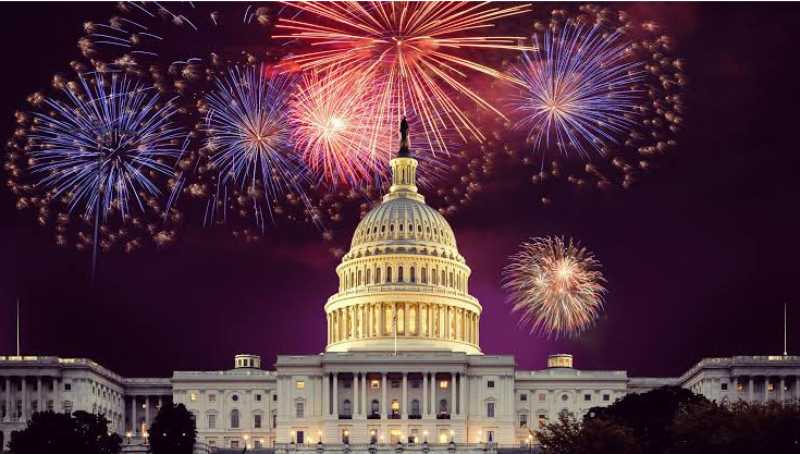
Fireworks dominate New Year celebrations in cities from Sydney to Rio. Historically, loud sounds and fire have also appeared in traditions intended to drive away evil or misfortune, while modern displays have become primarily spectacular public entertainment.
Today, a city skyline exploding in light has become almost synonymous with ringing in the New Year.
Kissing and raising a toast
In many Western celebrations, couples kiss at midnight while friends and family raise glasses to health, happiness and the year ahead.
The details vary, but the symbolism is straightforward. People want to begin the year connected to others and surrounded by good wishes.
“Auld Lang Syne”
Few songs are as closely connected with New Year as “Auld Lang Syne.” The words are associated with Scottish poet Robert Burns and ask, in essence, whether old friends and past times should be forgotten.
That makes it a remarkably appropriate New Year song. While everybody is looking forward, it quietly reminds us to remember who came before.
Lucky New Year foods and what they mean
Quick answer: New Year foods often symbolize money, longevity, progress or good fortune. The ingredients differ between countries, but the basic idea is remarkably consistent: eat something lucky and hope the year takes the hint.
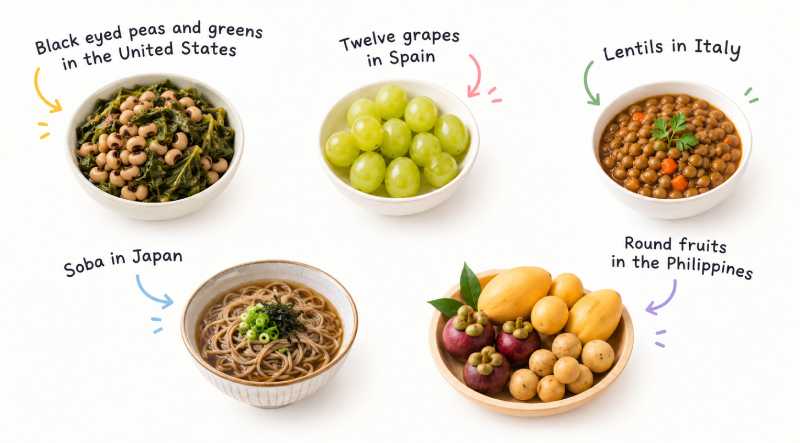
Black eyed peas and greens in the United States
In parts of the American South, black eyed peas are traditionally eaten for luck, often alongside greens associated symbolically with money and prosperity. Cornbread may also appear on the plate.
Whether the meal actually improves anyone’s finances is questionable, but at least it starts the year with a decent lunch.
Twelve grapes in Spain
Spain has one of the most entertaining New Year food traditions. At midnight, people try to eat twelve grapes, one with each chime of the clock, with each grape representing good fortune for one month of the coming year.
The custom is famously associated with Madrid’s Puerta del Sol, where crowds gather beneath the clock while millions more follow the chimes on television.
It sounds easy until you actually try eating twelve grapes on a clock’s schedule.
Lentils in Italy
In Italy, lentils are traditionally associated with New Year prosperity, partly because their small round shape resembles coins. They are often served with pork dishes such as cotechino.
It is a wonderfully practical superstition. Even if the fortune does not arrive, dinner still does.
Soba in Japan
Japanese New Year food carries its own symbolism. Toshikoshi soba, or year crossing noodles, is traditionally eaten around New Year’s Eve. The long noodles are associated with longevity, while their ability to break can symbolize leaving the difficulties of the old year behind.
Special New Year foods known as osechi are also eaten during the holiday period, with individual ingredients carrying wishes connected with health, happiness and prosperity.
Round fruits in the Philippines
Round fruits are popular around New Year in the Philippines because their shape resembles coins and is therefore associated with prosperity. Families may display or serve several varieties as part of the celebration.
Across continents, money seems to be one of the few things everyone agrees would be useful in the new year.
How New Year is celebrated around the world
Quick answer: New Year celebrations share common themes of hope, luck and renewal, but local traditions differ dramatically. Some countries welcome January with enormous public parties, while others emphasize family, religious visits, symbolic foods or quieter rituals of reflection.
New Year in the United States
American New Year’s Eve is strongly associated with parties, fireworks, resolutions and the Times Square Ball Drop in New York City. The Times Square celebration began in 1904, and the ball itself was first lowered in 1907. Today it is broadcast internationally and functions almost like a global clock for the final seconds of the year.
January 1 is usually much quieter. Families may watch sports, eat traditional foods or simply recover from the night before.
New Year in Scotland
Scotland calls New Year’s Eve Hogmanay, and the celebration is one of the country’s major cultural events. Edinburgh is famous for street parties and fireworks, while local traditions elsewhere include music, dancing and fire festivals.
One of the best known customs is first footing, in which the first person to enter a home after midnight is believed to influence the household’s luck. Visitors may bring gifts such as whisky, shortbread or coal. The singing of “Auld Lang Syne” also remains deeply associated with Scottish New Year celebrations.
New Year in Spain
In Spain, the final seconds of the year are measured in grapes.
Families and friends eat twelve lucky grapes in time with twelve clock chimes at midnight. Madrid’s Puerta del Sol is the best known gathering point, but the tradition is followed throughout the country and widely broadcast on television.
Dinner, cava and celebrations often continue well into the early hours.
New Year in Italy
Italian New Year celebrations combine family meals, parties, fireworks and foods associated with prosperity. Lentils are particularly symbolic because they resemble coins, while pork is traditionally linked with abundance and moving forward.
Red clothing, especially red underwear, is also widely associated with New Year luck in popular Italian tradition.
New Year in France
In France, New Year’s Eve is known as la Saint Sylvestre. Festive dinners may include seafood, oysters, foie gras, desserts and Champagne, followed by parties and midnight celebrations.
The French New Year is less defined by one single national ritual than by social gatherings, good food and wishes of bonne année once midnight arrives.
New Year in Germany
German New Year’s Eve, Silvester, is associated with fireworks, parties and fortune telling traditions. Wax pouring has become one modern variation of older lead pouring customs, with people interpreting the shapes as clues about the coming year.
Another wonderfully peculiar tradition is watching the British comedy sketch Dinner for One, which has become a recurring New Year television favorite in Germany despite being far less famous in Britain itself.
Culture sometimes has a sense of humor.
New Year in Japan
New Year in Japan can feel more reflective than the party centered model familiar in many Western countries.
On New Year’s Eve, Buddhist temples ring their bells 108 times in a ritual known as Joya no Kane, symbolically addressing the worldly desires or passions recognized in Buddhist tradition. Many people then make hatsumode, the first shrine or temple visit of the year, to pray for good fortune.
Toshikoshi soba is eaten around New Year’s Eve, while osechi foods and family gatherings form part of the holiday period. Rather than simply shouting at midnight, the Japanese New Year offers a different idea of starting again: clear something away before stepping forward.
New Year in Australia
Australia welcomes New Year in midsummer, which immediately changes the atmosphere. Outdoor parties, beaches and warm evenings replace the snowy imagery often associated with December in the Northern Hemisphere.
Sydney’s harbor fireworks are among the world’s most recognizable New Year spectacles. The combination of the Harbour Bridge, Opera House and fireworks has turned the city into one of the symbolic first major international celebrations watched as midnight moves across time zones.
New Year in Brazil
Brazilian New Year celebrations are particularly striking along the coast. At Rio de Janeiro’s Copacabana Beach, huge crowds gather for music and fireworks, with many people wearing white, a color associated with peace.
Brazilian tourism authorities also highlight practices with Afro Brazilian roots, including rituals by the sea and traditions such as jumping seven waves.
This is one of the things I like most about international New Year traditions. The celebration may be global, but cultures do not simply copy one another. They take the idea of a new beginning and give it their own language.
New Year superstitions and good luck customs
Quick answer: New Year superstitions usually revolve around attracting prosperity, love, health or travel while avoiding bad luck. They differ widely between countries, but most express the same hope that the first moments of the year can somehow influence what follows.
First footing in Scotland is one example. In other cultures, lucky colors are worn, doors or windows may be opened symbolically, or loud noises are made to drive away unwanted influences.
Some people avoid cleaning or lending money on New Year’s Day because they fear sweeping away luck or starting the year by giving wealth away. Elsewhere, suitcases may be carried around in the hope of attracting travel during the coming year.
Are any of these customs guaranteed to work? Probably not. But that may not really be the point.
Superstitions give people something physical to do with an invisible hope.
Interesting New Year facts
Quick answer: New Year’s Day has changed enormously across history. January 1 was not always the beginning of the year, many familiar traditions are relatively modern, and countries around the world have developed remarkably different ways of welcoming the same date.**
- January 1 was not always New Year’s Day. Different ancient societies began their years at different seasonal or religious points.
- January is named after Janus. The Roman god of beginnings and transitions was famously represented looking both backward and forward.
- New Year celebrations are thousands of years old. Ancient Mesopotamian societies held seasonal New Year festivals long before the modern calendar existed.
- The Times Square Ball Drop began in 1907. New Year celebrations had already been taking place in Times Square since 1904.
- The Ball Drop was suspended during World War II. In 1942 and 1943, wartime lighting restrictions prevented the traditional illuminated ball ceremony, although crowds still gathered.
- Spain eats twelve grapes at midnight. Each grape is associated with one month of luck in the year ahead.
- Japan rings temple bells 108 times. The ritual is connected with Buddhist ideas about worldly desires or passions.
- Scotland’s New Year is called Hogmanay. First footing, fire traditions and “Auld Lang Syne” are among its best known customs.
- White is strongly associated with New Year in Brazil. Large numbers of people wear white during coastal celebrations, particularly in Rio.
- Lucky food often resembles money. Lentils, round fruits and green vegetables are examples of foods whose appearance has helped connect them with prosperity.
- Not every New Year celebration is loud. Japan combines family customs and spiritual observances with temple bells and shrine visits, showing that renewal does not always require a giant party.
- Many countries celebrate January 1 while keeping other traditional New Year observances. A common civil calendar does not erase local religious and cultural systems of time.
Is New Year really a new beginning?
There is a phrase we hear every January: new year, new me.
I understand why people like it. There is something comforting about imagining that we can step across midnight and leave every bad habit, poor decision and disappointment behind us.
But life does not work quite so neatly.
Midnight does not erase debt. It does not repair a relationship, cure grief, finish an abandoned project or suddenly give us the discipline we could not find in November. The calendar can change in a second, while people usually change much more slowly.
I do not see that as a reason to dismiss New Year. In fact, I think it makes the holiday more meaningful.
Perhaps we do not need January 1 because it magically changes us. We need it because human beings occasionally need permission to stop and ask where they are going.
There is a difference between becoming someone new and choosing something new.
You can carry the same personality, the same history, the same scars and many of the same problems into January while still deciding to behave differently. You can call someone. Apply for something. Save a little more. Walk away from something that has already lasted too long. Start again without pretending the past never happened.
Maybe “out with the old” is not always the best advice.
Some parts of the old year deserve to stay.
Conclusion: What a new year really gives us
New Year looks different in New York, Edinburgh, Madrid, Tokyo, Sydney or Rio de Janeiro. Some people stand shoulder to shoulder beneath fireworks, some sing “Auld Lang Syne,” some struggle heroically through twelve grapes, some listen to temple bells and some walk toward the sea dressed in white.
The rituals change because cultures change. The hope underneath them does not change quite as much. We want health. We want enough money. We want the people we love to stay. We want old problems to become lighter and new opportunities to appear. Most of all, we want to believe that what happened before does not have to determine everything that happens next.
Perhaps that is why humanity keeps inventing ways to celebrate new years. The calendar changes instantly. Real change usually takes longer. But every once in a while, it helps to have a date that reminds us we are still allowed to begin again.