

Christmas is one of those rare holidays that can be recognized almost anywhere in the world, even in places where Christianity is not the dominant religion. A decorated tree, a red suited Santa, strings of lights, wrapped gifts and the familiar sound of Christmas music are enough to tell us that December has arrived.
Yet what I find most interesting about Christmas is not how universal it looks, but how different it becomes once it enters a particular culture. On the same December 25, one family may attend church at dawn, another may be opening presents in matching pajamas, Australians may be heading to the beach, and somewhere in Japan a family may be picking up fried chicken for dinner. The date is the same, but the meaning, food and rituals can be remarkably different.
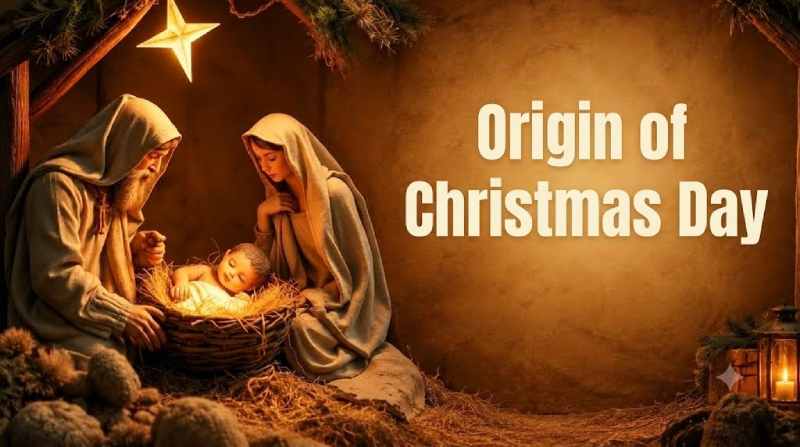
Christmas Day began as a Christian celebration of the birth of Jesus Christ, but over centuries it grew into something much larger. Religion remains at its heart for millions of people, while for others Christmas now means family, generosity, homecoming, gift giving, food or simply the feeling of the holiday season. That transformation is part of what makes Christmas worth looking at more closely.
What is Christmas Day and when is it celebrated?
Christmas Day is celebrated on December 25 every year. It traditionally commemorates the birth of Jesus Christ, but today it is also widely observed as a cultural and family holiday in many parts of the world.
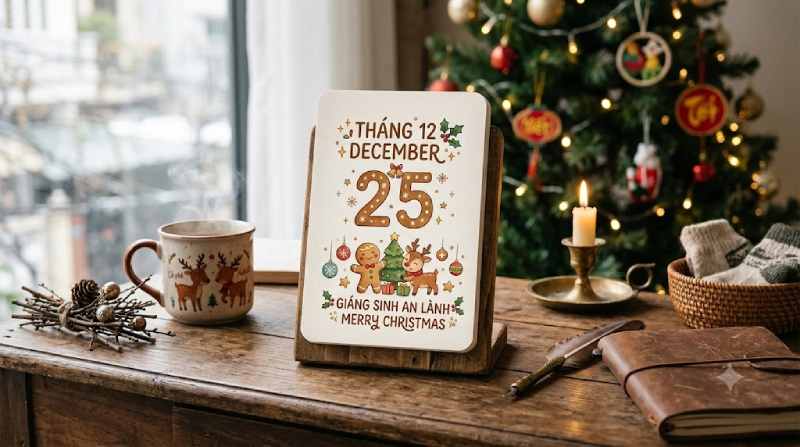
When is Christmas Day?
Christmas Day falls on December 25 each year, while Christmas Eve is observed on December 24. In 2026, Christmas Day falls on Friday, December 25, which means many people in countries where Christmas is a public holiday will move almost seamlessly into the weekend.
For most Western Christian traditions, December 25 is the standard date for Christmas. Some Eastern Orthodox communities, however, celebrate Christmas on a different civil date because their churches continue to use the Julian calendar for parts of the liturgical year. As a result, Christmas may be observed on January 7 in some Orthodox traditions, while the Armenian Apostolic Church traditionally celebrates the Nativity and Epiphany together on January 6.
This is a useful reminder that even something as apparently simple as the date of Christmas has never been completely uniform.
Is Christmas a religious or cultural holiday?
For Christians, Christmas celebrates the birth of Jesus Christ and forms one of the most important parts of the Christian calendar. Church services, Nativity scenes, prayers and biblical readings continue to be central to Christmas celebrations around the world.
At the same time, Christmas has become a major cultural holiday far beyond explicitly religious practice. Many people who rarely attend church still decorate Christmas trees, exchange gifts, prepare special meals and gather with family. In countries such as Japan and Vietnam, Christmas may be experienced largely as a seasonal and commercial celebration rather than a religious holiday.
I do not think one version necessarily cancels out the other. Traditions change when they travel. What begins in religion can become family culture, public ritual or even simple nostalgia, and Christmas may be one of the clearest examples of that process.
The history of Christmas
Quick answer: Christmas developed over centuries from early Christian celebrations, Roman winter traditions, medieval customs and later European practices. Many traditions now considered essential to Christmas appeared long after Christianity began commemorating the birth of Jesus.
The Christian origins of Christmas
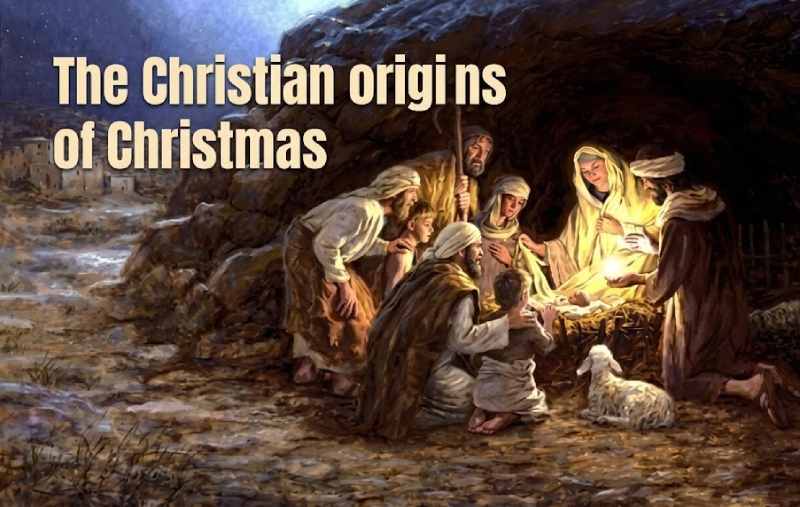
The New Testament tells the story of the birth of Jesus in Bethlehem, particularly in the Gospels of Matthew and Luke, but it does not provide an exact date for his birth.
Early Christianity also did not immediately center its religious calendar on Christmas. Easter and the death and resurrection of Christ were initially more prominent. By the fourth century, however, Christians in Rome were observing the Feast of the Nativity on December 25. Library of Congress records indicate that the celebration was established in Rome by at least the year 336.
From there, the observance gradually spread and developed into an important Christian festival.
Why December 25 became Christmas Day
Why December 25 was chosen remains debated by historians.
The date falls close to the winter solstice and existed within a Roman calendar already filled with midwinter celebrations. Roman traditions during this season involved feasting, greenery, light and gift giving. Historians have therefore long discussed whether the Christian date was influenced by existing Roman solar or winter festivals, although the precise development is more complicated than saying that Christians simply copied one pagan holiday.
What we can say with more confidence is that Christmas developed within a cultural world where winter celebrations already mattered. Over time, Christian theology and older seasonal customs became intertwined.
Christmas in medieval Europe
In medieval Europe, Christmas became an important religious and social season. Church services commemorated the Nativity, while communities marked the period with feasting, music and public celebrations.
The Christmas season was also much longer than the single day many people imagine today. Festivities could continue through the Twelve Days of Christmas until Epiphany in early January.
Food, hospitality and community were central. Wealthier households might host elaborate feasts, while charitable giving also became connected with the season. Many of the rituals differed by region, but Christmas increasingly became a time when religion and ordinary social life met around the same table.
How Christmas became the holiday we know today
Modern Christmas owes a great deal to the nineteenth century.
Victorian Britain helped shape the image of Christmas as a warm, family centered celebration built around children, meals, gifts and the home. The first commercial Christmas card appeared in Britain in 1843, the same year Charles Dickens published A Christmas Carol. The Library of Congress notes that both helped shape the Victorian idea of Christmas that later generations came to regard as traditional.
Christmas trees, which were strongly associated with German traditions, also became increasingly fashionable in Britain and North America during the nineteenth century. The Smithsonian traces the decorated tree tradition particularly to German customs, although evergreens had been used symbolically by many cultures long before the modern Christmas tree appeared.
This is something I find fascinating about Christmas. Many things we now treat as timeless are actually comparatively modern. Traditions often feel ancient simply because our grandparents already knew them.
What does Christmas really mean?
Christmas traditionally celebrates the birth of Jesus Christ, while its modern meaning also includes hope, generosity, family, reunion, charity and giving. What Christmas means today depends greatly on religion, culture and personal experience.
The religious meaning of Christmas
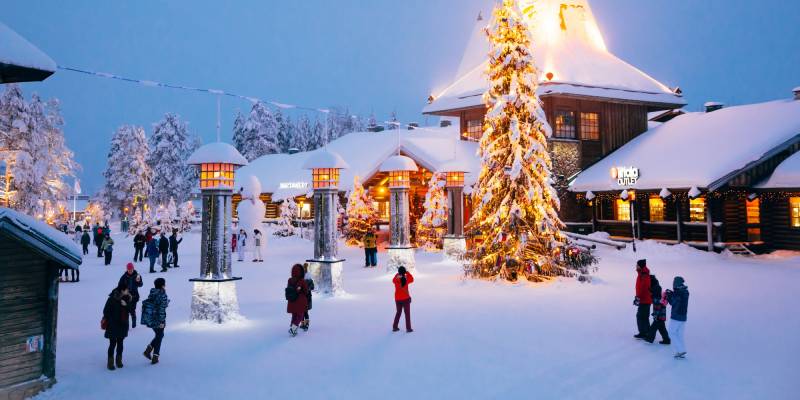
For Christians, Christmas begins with the Nativity. The birth of Jesus represents the arrival of Christ into the world and carries themes of hope, peace, salvation and God’s relationship with humanity.
This religious meaning can still be seen clearly in Midnight Mass, church services, Nativity scenes and Christmas hymns. Even many symbols that later entered popular culture retain a religious connection. The star, for example, recalls the Star of Bethlehem, while gift giving has often been associated with the gifts brought by the Magi.
For believers, Christmas therefore means considerably more than a festive season. It is a sacred celebration.
Family, generosity and togetherness
Outside the church, Christmas has developed another powerful meaning: coming together.
People travel home, relatives who rarely see one another sit around the same table, parents recreate traditions from their own childhood and children begin forming memories they may carry for decades.
Christmas also encourages giving beyond the family. Charity drives, community meals, donations, volunteering and support for people in need become particularly visible during the season. Perhaps this is one reason the holiday has remained meaningful even for people who do not approach it religiously.
There is something very human underneath the Christmas story: the desire to belong somewhere and to know that somebody thought of us.
A present does not need to be expensive to communicate that. Neither does a meal need to be perfect. Sometimes being remembered is the gift.
Has Christmas become too commercial?
Christmas has probably never been more visible, yet I sometimes wonder whether its meaning has become less visible.
The season now begins earlier every year. Shops fill with Christmas products before autumn seem to have properly ended. Advertising tells us what to buy, social media shows us what our homes should look like, and gift lists can begin to feel less like generosity and more like an annual financial assignment.
Then there is the pressure to create the perfect Christmas. The perfect tree, perfect dinner, perfect family photograph and perfect pile of presents all need to appear effortless, even though somebody has probably spent weeks making them happen.
I do not think commerce automatically destroys Christmas. People have bought gifts, prepared feasts and enjoyed seasonal markets for centuries. Pleasure is not the enemy of meaning.
The problem begins when buying becomes the meaning.
Perhaps that is why A Christmas Carol still feels relevant almost two centuries after Dickens wrote it. Scrooge’s transformation is ultimately not about discovering that Christmas is fun. It is about rediscovering generosity, human connection and responsibility toward other people.
Modern Christmas gives us more ways than ever to decorate it, photograph it and purchase it. The harder question is whether we still remember what we want the celebration to mean.
Are we celebrating Christmas, or are we simply consuming it?
I suspect the answer depends on what remains after the wrapping paper is thrown away.
The most popular Christmas traditions
Popular Christmas traditions include decorating Christmas trees, exchanging gifts, hanging stockings, singing carols, attending church, decorating homes with lights, sharing festive meals and gathering with family on Christmas Eve or Christmas Day.
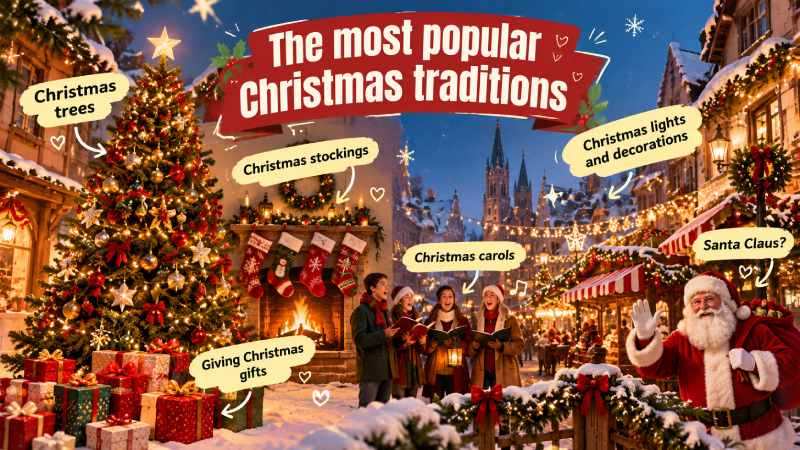
Christmas trees
The modern Christmas tree is strongly associated with German speaking Europe. Decorated evergreen trees gradually spread through Europe and North America, becoming one of the most recognizable symbols of the holiday.
Today, families decorate trees with lights, ornaments, stars, ribbons and objects collected over many years. Some trees look carefully designed. Others contain school crafts, family photographs and decorations that make absolutely no aesthetic sense together.
Personally, I prefer the second kind. A Christmas tree that carries family history is more interesting than one that looks like a department store display.
Giving Christmas gifts
Gift giving has several layers of meaning. Christians may connect it with the Magi bringing gifts to Jesus, while European customs surrounding Saint Nicholas also shaped the tradition of giving presents to children.
Over time, gifts became one of the defining elements of modern Christmas. Families may open them on Christmas Eve or Christmas morning depending on local tradition.
Christmas stockings
Christmas stockings are commonly linked with legends about Saint Nicholas secretly giving money to a poor family. Later storytelling described coins or gold falling into stockings hung near the fireplace to dry.
Today, children often hang stockings for Santa Claus to fill with candy, small toys and other surprises.
Christmas carols
Christmas music began largely through religious songs celebrating the Nativity, but the category has expanded enormously. Traditional hymns now sit beside pop songs, jazz standards and songs about snow, romance, Santa Claus and coming home.
By December, avoiding Christmas music in some countries becomes almost impossible.
Christmas lights and decorations
Candles once provided much of the symbolic light associated with Christmas. Electric lighting later transformed the tradition, allowing homes, trees, streets and entire neighborhoods to become part of elaborate seasonal displays.
For some families, driving around simply to look at Christmas lights has become a tradition of its own.
Christmas Eve traditions
Christmas Eve on December 24 can be as important as Christmas Day itself. Many Christians attend evening or Midnight Mass, while families in numerous European and Latin cultures hold their main Christmas meal on Christmas Eve.
Gift opening also varies. Americans commonly open presents on Christmas morning, while families in countries such as Germany and parts of Europe may exchange them on Christmas Eve.
The same holiday can therefore begin at very different moments depending on where you grow up.
Who is Santa Claus?
Quick answer: Santa Claus is a legendary Christmas figure inspired largely by Saint Nicholas, a fourth century Christian bishop remembered for generosity and gift giving. Over centuries, European traditions, literature and popular culture gradually shaped him into the Santa recognized today.
Saint Nicholas was associated with Myra, in what is now Türkiye, and legends about his generosity became widespread across Europe. Different cultures later developed their own Christmas gift givers, including Father Christmas in Britain, Père Noël in France, Weihnachtsmann in Germany and Papá Noel in Spanish speaking countries.
The American name Santa Claus developed from the Dutch Sinterklaas, itself derived from Saint Nicholas. Over the nineteenth and twentieth centuries, poems, illustrations and advertising helped standardize the familiar image of a cheerful, white bearded man dressed in red who travels by sleigh and delivers gifts on Christmas Eve.
One persistent myth says a certain soft drink company invented Santa’s red suit. It did not. Red clad versions of Santa existed earlier, although twentieth century advertising certainly helped make that appearance globally recognizable.
Santa is a good example of how Christmas evolves. A Christian saint became folklore, folklore became popular culture, and popular culture eventually produced one of the most recognizable characters on Earth.
How Christmas is celebrated around the world
Quick answer: Christmas is celebrated differently around the world, with customs shaped by religion, climate, history and local culture. Traditional Christmas food varies just as widely, from roast turkey and pudding to seafood, tamales, panettone and even fried chicken.
Christmas in the United States
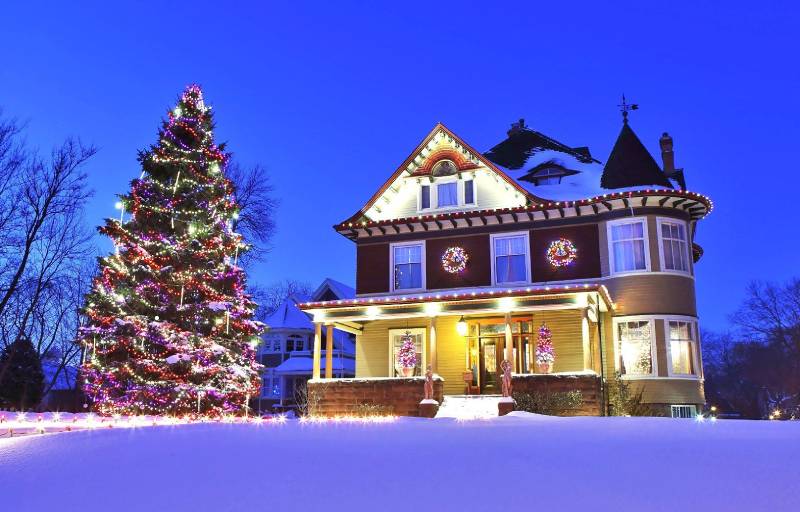
American Christmas usually revolves around family, Santa Claus, decorated homes, Christmas movies, gifts on Christmas morning and large meals. Turkey, ham, mashed potatoes, casseroles, cookies and pies are common, although menus vary considerably between families.
Christmas lights can become serious neighborhood business, and some households go all out with elaborate outdoor displays.
Christmas in the United Kingdom
British traditions include Christmas crackers, roast dinners, mince pies, Christmas pudding and the monarch’s Christmas Broadcast. The first royal Christmas radio broadcast was delivered by King George V in 1932 and remains part of Christmas Day for many British families.
Boxing Day on December 26 extends the holiday atmosphere into another day of family gatherings, shopping and sport.
Christmas in Germany
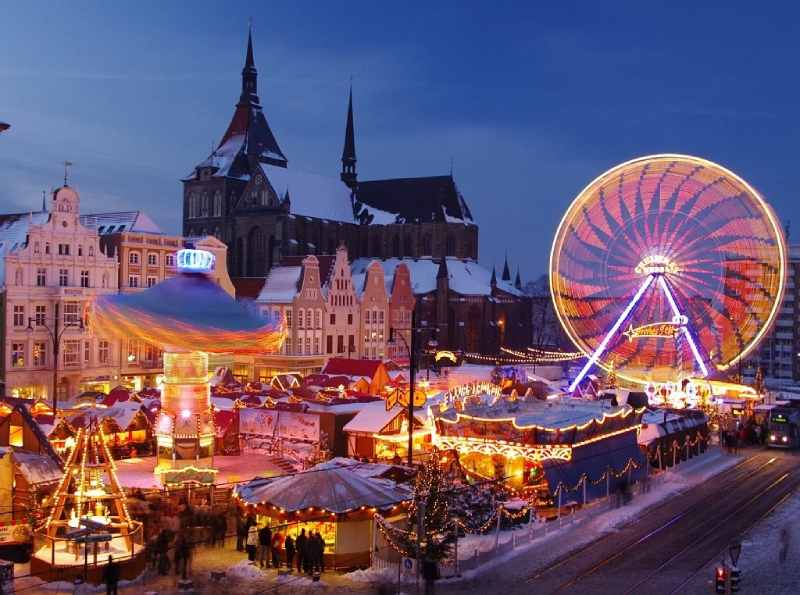
Germany is famous for Advent traditions and Christmas markets filled with lights, crafts, gingerbread, roasted nuts, Stollen and mulled wine. Saint Nicholas Day on December 6 is also observed in many families, with children leaving cleaned shoes or boots out for treats.
Germany’s Christmas culture also played an important role in spreading the decorated Christmas tree internationally.
Christmas in Italy
Italy combines religious tradition with strong regional food culture. Nativity scenes remain particularly important, while Christmas meals may feature pasta, seafood, roast meat, panettone or pandoro.
The Christmas season continues into Epiphany on January 6, when La Befana, a folkloric old woman, is said to bring sweets or coal to children.
Christmas in France
French Christmas celebrations often center on Réveillon, a festive meal associated with Christmas Eve or the holiday season. Depending on the region and family, the table may include oysters, seafood, poultry, foie gras, cheese and the familiar bûche de Noël. France’s official tourism site also highlights Christmas markets, lights and regional food traditions across the country.
Christmas in Spain
Spain’s Christmas season stretches well beyond December 25. The enormous El Gordo Christmas lottery on December 22 is a national tradition, while gift giving has historically been closely associated with the Three Kings and January 6.
Seafood, cured ham, roast meats, turrón and other sweets often appear during festive meals.
Christmas in Australia
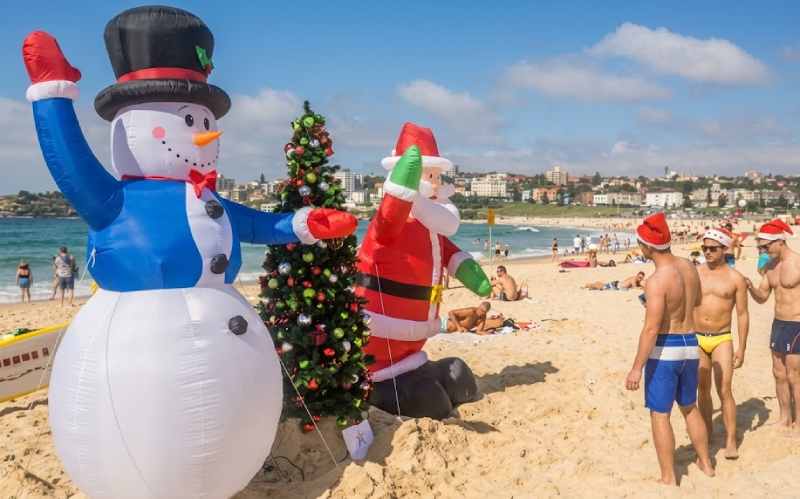
Christmas looks very different when December falls in summer.
Australians may spend Christmas at the beach, hold outdoor lunches and serve seafood, barbecue dishes, salads, ham and pavlova. Tourism Australia even describes spending Christmas Day at the beach as a distinctly Australian experience.
For anyone raised on images of snow, fireplaces and wool sweaters, seeing Santa beside a surfboard is a useful reminder that “traditional Christmas weather” depends entirely on which half of the planet you live on.
Christmas in Japan
Christmas in Japan is largely a cultural rather than religious holiday. Illuminations, romantic dates, Christmas cake and gift giving are popular seasonal customs.
One of its most famous modern traditions is eating fried chicken at Christmas, a habit strongly associated with successful twentieth century marketing. It may sound unusual elsewhere, but that is exactly how traditions begin. Repeat something long enough, attach memory to it, and eventually it feels normal.
Christmas in Latin America
There is no single Latin American Christmas. In Mexico, Las Posadas reenacts Mary and Joseph’s search for lodging, while tamales and other family dishes are common during the season. Colombia is known for candle lighting traditions in December, while Brazilian families often gather late on Christmas Eve for large meals that may include roast meats, rice, farofa and desserts.
Across much of the region, Catholic traditions remain influential, but local food, music and family customs give Christmas a distinct character.
Christmas in Asia
The Philippines has one of the world’s most visible Christmas seasons, with decorations and music often appearing months before December. Religious observance, family gatherings, lanterns and large meals all play important roles.
South Korea recognizes Christmas as a public holiday, while in Vietnam the celebration is particularly visible in major cities through lights, shopping areas, churches and public festivities. For many Vietnamese who are not Christian, Christmas functions more as a cultural celebration and social occasion.
The interesting thing about Christmas around the world is that cultural adaptation has not weakened it. Quite the opposite. Christmas has survived partly because people keep translating it into their own lives.
Interesting Christmas facts
Quick answer: Many Christmas customs that seem ancient are surprisingly modern, and several familiar stories about the holiday are more complicated than they first appear.
- Christmas was not always celebrated on December 25. The Bible does not provide an exact birth date for Jesus, and early Christian communities did not all observe the Nativity on the same date.
- Christmas was being observed in Rome on December 25 by at least AD 336. This is among the earliest clear evidence for the date in Christian practice.
- Christmas trees have strong German roots. Decorated evergreen trees became especially associated with German traditions before spreading more widely through Europe and North America.
- The first commercial Christmas card appeared in Britain in 1843. Henry Cole commissioned the card in the same year Dickens published A Christmas Carol.
- “Xmas” is not simply a modern attempt to remove Christ from Christmas. The letter X has long been used as an abbreviation connected with the Greek word Christos.
- Santa Claus has roots in Saint Nicholas. The modern character developed through centuries of religious tradition, folklore, literature and popular culture.
- Christmas crackers originated in nineteenth century England. They later became a familiar part of British Christmas meals.
- Christmas was once restricted or opposed by some Puritan authorities. In seventeenth century England and colonial New England, certain Puritan communities rejected Christmas festivities as unbiblical or excessive.
- The modern Christmas card and Victorian family Christmas developed at almost the same time. Nineteenth century Britain played a major role in shaping what many people now imagine as a “traditional” Christmas.
- Not every country exchanges gifts on December 25. In some cultures, Christmas Eve, Saint Nicholas Day or Epiphany may be more important for gift giving.
- Christmas in Australia happens during summer. Beaches, outdoor meals and barbecue can therefore be just as authentic a Christmas tradition as snow and fireplaces.
- Japan turned a marketing campaign into a Christmas tradition. Fried chicken became closely associated with the holiday despite Christmas not being a traditional Japanese religious festival.
Conclusion: What Christmas still gives us
Christmas may look completely different in New York, London, Rome, Tokyo, Manila or Sydney. The weather changes, the food changes, the language changes, the religious emphasis changes, and even the day when people exchange gifts may be different.
Yet beneath those differences, Christmas continues to circle around a surprisingly small group of human needs. We want to belong somewhere. We want to give something to someone we care about. We want to gather, remember, eat together and, if possible, come home.
Perhaps that is why Christmas has travelled so far beyond the world in which it began.
Its rituals have changed many times, and they will continue to change. I do not think tradition needs to remain frozen in order to remain meaningful. A German Christmas market, an American Christmas morning, an Italian Nativity scene and an Australian barbecue can all belong to the same larger story.
The greater risk is not that Christmas changes. Traditions have always changed. The greater risk is that we become so busy creating Christmas that we forget to experience it.
A beautiful tree will eventually come down. The lights will be packed away, the food will disappear, the gifts will become ordinary possessions and December will turn into January.
What tends to stay with us is much simpler: who was there, who we missed, who remembered us and whether, for a little while, we felt at home.
Maybe that has always been the part worth keeping.
Pingback: New Year’s Day: History, meaning & traditions around the world